


20, Jan 2026
Hard Water Stains in East London Flats Or How To Solve The Limescale Issue Before You Move Out
You’re three days from your final tenancy inspection, everything’s packed, and you’ve just noticed your bathroom taps look like they’re auditioning for a role in a cave formation documentary. Welcome to the East London hard water experience, where limescale doesn’t just happen – it throws a full-blown mineral rave on every surface it touches.
If you’re renting anywhere from Hackney to Stratford, Bethnal Green to Bow, you’ve likely developed an intimate relationship with that chalky white menace that transforms shiny chrome into crusty disasters. And here’s the kicker: your landlord’s inventory clerk absolutely will notice. Those “minor cleaning issues” can quickly translate into three-figure deposit deductions faster than you can say “Thames Water catchment area.”
The good news? Limescale might be persistent, but it’s not invincible. Let’s talk about how to reclaim your deposit from the clutches of calcium carbonate.
Why East London Has Britain’s Hardest Water (And Why Your Kettle Knows It)
East London sits atop a massive chalk aquifer that’s been filtering groundwater since your flat was probably a Victorian workhouse. This geological quirk means the water flowing through your taps has picked up an absolutely heroic amount of calcium and magnesium on its underground journey. We’re talking some of the hardest water in Britain – regularly clocking in at over 300 parts per million of dissolved minerals.
Your kettle hasn’t been lying to you. That flaky white buildup isn’t a design feature, and that peculiar film on your morning cuppa isn’t adding “mineral notes” – it’s evidence you’re living in a hard water hotspot that would make a geologist weep with joy and a tenant weep with frustration.
The Thames Water region, which covers most of East London, consistently ranks as one of the UK’s hardest water areas. This isn’t just trivia for pub quizzes – it’s the reason your shower screen looks frosted when you definitely didn’t buy frosted glass, and why your bathroom grout has developed what can only be described as mineral acne.
The True Cost of Ignoring Limescale: What Your Deposit Inspection Will Reveal
Bathroom Battlegrounds: Where Limescale Loves to Hide
Inventory clerks aren’t just thorough – they’re basically limescale detection bloodhounds. They know every spot where hard water stains accumulate, and they’re contractually obligated to point them out with the enthusiasm of a metal detector enthusiast finding actual metal.
Shower screens and enclosures are prime targets. That cloudy residue you’ve been squinting through for months? That’s not “character” – that’s calcium carbonate having the time of its life. Taps, showerheads, and chrome fixtures come next. If your bathroom taps have developed white crusty collars, you’re looking at potential deductions.
The toilet bowl waterline is another favourite inspection casualty. That stubborn ring isn’t just unsightly – it’s a neon sign reading “tenant didn’t deep clean.” And don’t even get started on grouting. If your tile grout has gone from grey to chalky white, you’ve got a limescale situation that won’t pass muster.
Here’s the legal bit worth knowing: “fair wear and tear” does not cover limescale buildup. Courts have repeatedly sided with landlords on this one, ruling that preventable mineral deposits fall under tenant cleaning responsibilities. Annoying? Absolutely. But knowing this might just save you £200.
Kitchen Catastrophes: The Sneaky Spots Tenants Always Miss
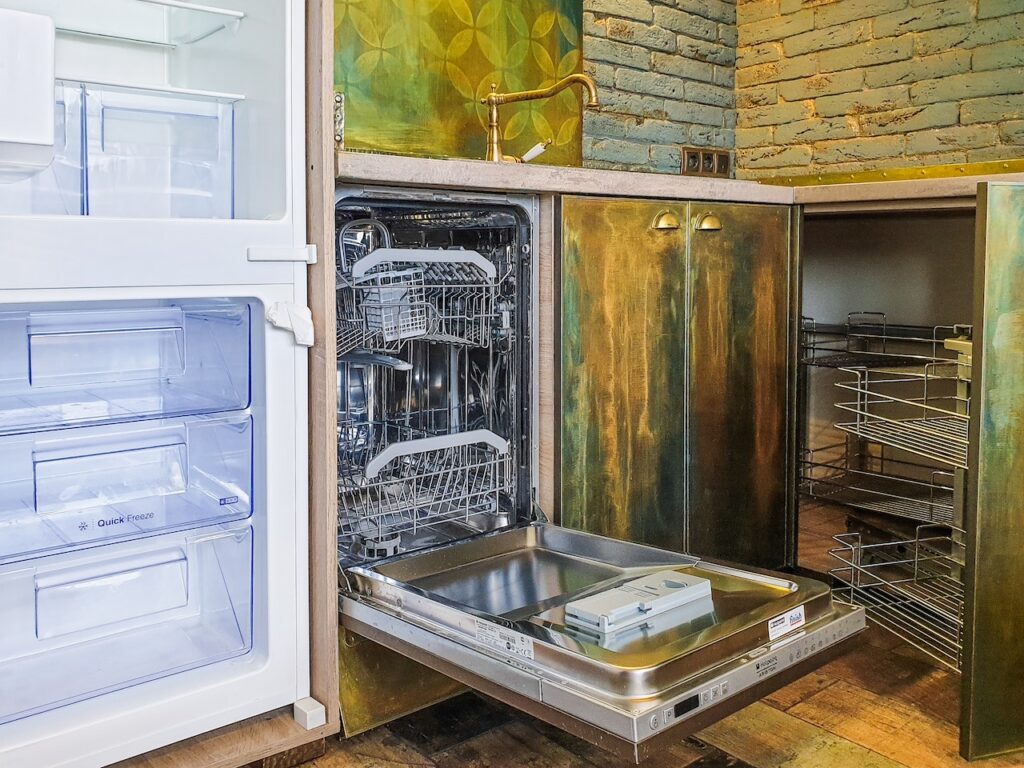
Kitchens are where limescale goes stealth mode. Sure, you’ll spot it on the tap – but what about inside the dishwasher? Those white streaks on the door seal and the crusty buildup around the detergent dispenser are deposit inspection gold for landlords.
Washing machine drawer compartments are limescale magnets. Pull yours out right now – we’ll wait. Horrifying, isn’t it? That thick white sludge isn’t helping your laundry smell fresh, and it’s definitely getting photographed during checkout.
Tap aerators (those little mesh screens at the end of your taps) get completely choked with mineral deposits. When water flow slows to a dribble, tenants usually blame water pressure, but it’s often just limescale blocking the works. Inspectors check these. Sink drains, particularly around stainless steel, develop crusty deposits that scream “I haven’t been properly cleaned.”
The Arsenal: What Actually Works Against East London Limescale
Shop-Bought Solutions That Aren’t Complete Rubbish
Let’s cut through the supermarket cleaning aisle nonsense. Viakal and Cillit Bang Limescale are the workhorses of British descaling – they’re acidic enough to actually dissolve calcium carbonate, unlike some of the gentler offerings that basically just smell nice whilst achieving nothing.
HG Professional Limescale Remover is the nuclear option – stronger formulation, higher price point, but genuinely effective on stubborn buildups. Worth the Waitrose markup if you’re facing inspection-critical surfaces. For general maintenance, own-brand supermarket descalers from Tesco or Sainsbury’s work fine and won’t bankrupt you.
Here’s the truth about Poundland descaler: it works, but you’ll need more elbow grease and repeat applications. Fine for regular maintenance, less ideal for panic-cleaning three days before checkout.
Avoid anything marketed as “natural” or “eco-friendly” in mainstream supermarkets unless it specifically lists acetic or citric acid as active ingredients. Lovely lavender-scented water might make you feel virtuous, but it won’t shift limescale.
The Natural Alternatives (Yes, White Vinegar Really Does Work)
White vinegar isn’t just for chips – it’s legitimately brilliant at dissolving limescale. The acetic acid breaks down calcium carbonate chemically, and at roughly 60p per litre from any supermarket, it’s absurdly cost-effective. The downside? Your flat will smell like a particularly aggressive fish and chip shop for several hours.
Use it undiluted for serious limescale, or dilute 50/50 with water for maintenance cleaning. Soak cloths in vinegar and wrap them around taps overnight for stubborn deposits. For showerheads, fill a sandwich bag with vinegar, secure it around the head with an elastic band, and let chemistry do its thing for a few hours.
Citric acid powder (available in the baking aisle or online) is vinegar’s less pungent cousin. Mix 2-3 tablespoons per litre of warm water for an effective descaling solution that won’t have your neighbours thinking you’ve opened an illegal chippy. Brilliant for kettles, dishwashers, and washing machines.
Lemon juice works on the same principle but costs significantly more per application. Save actual lemons for gin and use citric acid powder instead – your wallet will thank you.
Room-by-Room Battle Plan: Your Pre-Move-Out Limescale Elimination Guide
Bathroom Blitz: A Step-by-Step Deep Clean
Start with the shower screen because it’s the most visible nightmare. Spray generously with descaler (or vinegar), let it sit for 15-20 minutes – seriously, don’t rush this – then attack with a non-scratch scouring pad. For stubborn spots, make a paste with bicarbonate of soda and descaler, apply it, and give it another 15 minutes before scrubbing. Rinse thoroughly and squeegee dry. The squeegee step matters because water spots will photograph as “not properly cleaned.”
Taps and chrome fixtures need the overnight treatment if they’re properly scaled up. Soak cloths or kitchen roll in descaler, wrap around the affected areas, and leave for several hours or overnight. Morning scrub with an old toothbrush gets into all those crevices. Polish dry with a microfibre cloth for that showroom shine.
The toilet bowl waterline responds well to thick bleach left overnight (pour it around the rim and let gravity do its thing), but for limescale specifically, you need acid. Toilet-specific descalers work, or you can pour a bottle of white vinegar in, leave it overnight, and scrub in the morning. For the under-rim deposits inspectors love photographing, use a pumice stone designed for toilets – genuinely magical for stubborn mineral buildup.
Grouting is tedious but essential. An old toothbrush, descaling solution, and patience are your allies. Work in small sections, spray, wait, scrub, rinse, repeat. Budget 2-3 hours for an average bathroom if the grout’s properly scaled up.
Realistic time estimate for a standard East London bathroom: 3-4 hours for a proper limescale-elimination deep clean.
Kitchen Kommando Mission: Leaving It Landlord-Ready
Dishwashers need an empty hot cycle with either a proprietary dishwasher cleaner or 250ml of white vinegar poured into the base. Remove and scrub the filter (you know, that thing you’ve never touched), wipe down all door seals, and descale the detergent dispenser with an old toothbrush.
Washing machines get similar treatment – run an empty hot cycle with washing machine cleaner or vinegar. Pull out the detergent drawer completely, soak it in hot water with descaler, and scrub away all that grim buildup. Check the rubber door seal for any limescale or mould – inspectors absolutely look here.
Kitchen taps follow the same protocol as bathroom taps, but don’t forget to unscrew the aerator and either soak it in descaler or replace it entirely if it’s beyond salvation. They cost about £3 and can make the difference between “needs cleaning” and “sparkling.”
Stainless steel sinks benefit from a descaler treatment followed by a buff with a microfibre cloth and a tiny bit of olive oil. Sounds bonkers, but it works brilliantly for that professional finish.
Realistic time estimate for a standard kitchen: 2-3 hours including appliances.
When to Call in the Professionals (And Why It Might Save Your Deposit)
Sometimes DIY isn’t enough, and that’s not a personal failing – it’s just East London hard water being particularly vindictive. Professional end of tenancy cleaners have access to industrial-strength descalers that aren’t available to the public, plus equipment like steam cleaners that make short work of stubborn deposits.
Here’s the maths that matters: a professional end of tenancy clean typically costs £150-250 for a one-bedroom East London flat. A failed inspection can result in deposit deductions of £200-500 or more. Professional cleaners also usually guarantee their work – if the landlord rejects it, they’ll return and re-clean.
What should you look for? Companies registered with professional bodies (NCCA or BICSc are the gold standards), public liability insurance, genuine customer reviews on independent platforms (not just their own website), and specific experience with end of tenancy cleaning in hard water areas.
Red flags include: quotes that seem absurdly cheap (you get what you pay for), companies that won’t provide written guarantees, or cleaners who can’t specifically discuss their approach to limescale in hard water areas. If they don’t immediately understand why East London requires special attention to mineral deposits, keep looking.
Prevention Mode: Tips for Tenants Who Aren’t Moving Yet
Future you will absolutely worship present you for implementing a basic limescale prevention routine. Weekly squeegee action on shower screens after use prevents 80% of buildup. It takes literally 30 seconds and saves hours of scrubbing later.
Keep a spray bottle of diluted vinegar (50/50 with water) under the sink and spritz shower screens, taps, and sinks weekly. Wipe down, rinse, done. Monthly descaling of your kettle, dishwasher, and washing machine prevents the kind of buildup that requires industrial intervention.
Chrome fixtures benefit from a quick wipe-down with a microfibre cloth after use – it sounds fussy, but it genuinely prevents that crusty collar situation. For shower heads, the bag-and-vinegar trick once a month keeps water pressure strong and limescale at bay.
Conclusion
East London’s hard water is relentless, chalky, and absolutely determined to turn your rental into a geological exhibit. But limescale is chemistry, and chemistry can be beaten with the right acids, techniques, and timing. Start your deep clean at least two weeks before your inspection – panic cleaning the night before is a recipe for missed spots and deposit deductions.
Whether you’re going full DIY warrior with vinegar and elbow grease or calling in professional reinforcements, the key is action. Ignoring limescale won’t make it disappear – it’ll just make your landlord richer and your deposit smaller.
And if you’d rather spend your final weeks in London doing literally anything other than scrubbing calcium deposits? That’s precisely why professional end of tenancy cleaning services exist. Sometimes the best move is admitting that limescale elimination is someone else’s superpower – and getting your full deposit back is worth every penny.
- 0
- By Connor McNamara

11, May 2024
The Hidden Benefits of Hiring a Professional End of Tenancy Cleaner in London
When you’re moving out of a rental place, it’s easy to feel overwhelmed and stressed out, especially when it’s time for that end-of-tenancy cleaning. Many renters don’t realise just how crucial this final cleaning job is, and it can end up causing arguments with your landlords or even losing you that security deposit.
Let’s chat about why you really need to get that end-of-tenancy clean sorted, the perks of bringing in a professional cleaner in London, what to think about when picking a cleaner, and some tips for getting all set for the cleaning process.

The Importance of End of Tenancy Cleaning
End of tenancy cleaning is essential for property management because it ensures that the property is handed over in top-notch condition, meeting all the necessary standards for a seamless transition between tenants. This thorough cleaning process helps protect the security deposit and plays a crucial role in property inspection and maintenance.
When you carry out a detailed end of tenancy cleaning, you can maintain the property’s reputation, attracting potential tenants with well-kept spaces. A clean, well-maintained property shows professionalism and care, building trust with current and future tenants.
Taking care of any lingering maintenance issues during the cleaning process ensures that the property is in the best possible condition, minimising the chances of disagreements over security deposit deductions. Property inspections are much easier and more favourable when the property is spotless, showcasing its value and appeal.
Why is it Necessary?
In terms of end of tenancy cleaning, you’re in for more than just a tidy space. This service goes beyond simply cleaning up – it’s all about giving property owners and tenants a stress-free experience, top-notch results, and peace of mind throughout the handover process.
For property owners like you, end of tenancy cleaning is a game-changer. It takes the weight off your shoulders by ensuring the property is left sparkling clean, easing stress and freeing up precious time for other essential tasks. And for tenants like you, there’s nothing like the peace of mind that comes with knowing your deposit is as good as back in your pocket, thanks to the high standards of cleaning delivered. This process builds trust and respect between property owners and tenants, leading to a smoother transition for everyone involved.

The Benefits of Hiring a Professional Cleaner
When you hire a professional cleaner for your end of tenancy cleaning, you can expect top-notch expertise and professionalism that guarantees a deep clean using professional equipment, giving you superior results. Handing this task to a trusted company ensures a stress-free experience.
Professionals who specialise in end of tenancy cleaning know all about the unique cleaning challenges that come with move-out situations, like those stubborn stains, grease build-up, and hard-to-reach grime. Their expertise lets them tackle these issues like a pro, making sure the property is left sparkling clean and all set for the next tenants.
With professional cleaners on the job, you can count on them to bring in specialised equipment like industrial-grade vacuum cleaners, steam cleaners, and eco-friendly cleaning solutions that you won’t find in your usual household cleaning supplies. This means you get a thorough and hygienic cleaning process that leaves no corner untouched.
Time and Energy Savings
When you hire a professional cleaner for end of tenancy cleaning, you enjoy some major time and energy savings. Their efficient service means the cleaning is done quickly, making life easier for property owners and tenants like you.
Professional cleaners don’t just bring their expertise to the table – they also come equipped with specialised tools and top-notch cleaning products that are essential for a thorough end of tenancy clean. Their skill in tackling different surfaces and areas means they get the job done right, leaving your property sparkling and move-in ready in less time than if you were to tackle it yourself. This efficiency saves you time and effort and ensures the job is done to a high standard, meeting the expectations of landlords and property managers.

High-Quality Cleaning Services
You know you can always rely on professional cleaners to provide top-notch services that give you a deep, superior clean, leaving your space sparkling and fresh—a true testament to their dedication to quality results.
Their keen eye for detail means they leave no corner untouched, ensuring every inch is scrubbed to perfection, giving you a space that feels like new. Armed with their know-how and specialised tools, they can tackle even the toughest stains or stubborn grime, returning your property to its original glory. Their end of tenancy cleaning goes beyond the surface, getting into those often overlooked areas. Their level of commitment and thoroughness ensures your space isn’t just clean, sanitised, and ready for its next occupants.
Avoiding Disputes with Landlords
Choosing professional end of tenancy cleaning services can save you from potential disputes with your landlord regarding the security deposit, property inspections, and the overall condition of the property. When you leave the place in pristine condition, you reduce the risk of arguments over cleanliness or damages that might affect your deposit return. This proactive approach not only eases the transition to your next home but also helps preserve a positive relationship with your landlord. Leaving a good impression may even lead to a favourable reference for your future rentals, ensuring that you maintain a good reputation in the rental market.
This move saves you time and effort and shows that you respect the property and those who take care of it. Landlords appreciate tenants who stick to their end of the rental deal by keeping the living space clean and tidy.
Regularly cleaning and maintaining the property demonstrates responsibility and care, making property inspections easier and reducing conflicts over security deposits. Investing in professional cleaning services before you move out can make a big difference in the final property inspection and affect whether you get your security deposit back.
Factors to Consider When Choosing a Professional Cleaner
When you’re looking for a professional cleaner for your end of tenancy cleaning, there are a few key factors you should keep in mind. First, you want to consider their experience, reputation, the services they offer, pricing, and availability to ensure you get a cleaning experience that’s just right for you.
Experience is a big deal because it shows how skilled the cleaner is at handling different types of end of tenancy cleaning tasks. A company with a solid reputation is more likely to provide top-notch service and leave you satisfied.
Having various services to choose from ensures that all your cleaning needs are covered, whether you need a deep clean or help with carpets and upholstery. Transparent pricing is a must to avoid any unexpected costs, and being able to schedule appointments at times that work for you makes the whole process easier, especially when you’re moving out.
Experience and Reputation
In terms of end-of-tenancy cleaning, you want to go with professional cleaners who’ve been around the block and have a solid reputation. These experts know their stuff and will ensure your place is sparkling clean, leaving you satisfied and stress-free.
Experienced cleaners bring professionalism you can rely on, giving you peace of mind knowing your property is in good hands. They understand the importance of their reputation and work hard to maintain it by providing top-notch service. Their main goal is customer satisfaction, so they’ll tailor their cleaning to fit your needs and won’t miss a single detail.
Opting for cleaners with a proven track record of excellence means you can expect a thorough job and a hassle-free experience.
Services Offered
When looking for professional cleaners, check out their wide range of services. Look for detailed cleaning, customised solutions, and a personalised approach that caters to your specific needs and preferences, giving you a tailor-made cleaning experience.
By evaluating professional cleaners for end of tenancy cleaning, you can enjoy a thorough and meticulous cleaning process that leaves no corner untouched. These cleaning pros know how to adapt their services to meet your unique requirements, ensuring every inch of your property is sparkling clean. They pay attention to the details, tackling hidden dirt and grime to deliver a perfectly pristine result. With their personalised approach, you’ll feel a sense of trust and satisfaction throughout the cleaning process, knowing you’re valued and taken care of every step.
Pricing and Availability
When looking for professional cleaners, you want to find ones that offer competitive pricing, flexible scheduling options, cost-effective solutions, and reliable services to ensure your end of tenancy cleaning goes smoothly and fits your budget and needs.
As you weigh your options, consider the pricing and availability of different professional cleaners to find one that works for you. Affordable rates mean you get the most bang for your buck without sacrificing quality. With flexible scheduling, you can choose a time that suits your schedule, whether a busy weekday or a laid-back weekend. Reliability is key—you want a cleaner who shows up on time and gets the job done right, especially during the stress of moving out.
Tips for Preparing for End of Tenancy Cleaning
When you’re gearing up for end of tenancy cleaning, there are a few key steps you’ll want to tackle. First, organise things by decluttering and setting up a cleaning checklist. And don’t forget to chat with your pro cleaner to ensure everything runs smoothly.
Start by decluttering the space – it’s a game-changer for making cleaning easier and quicker. Sort your stuff into piles to keep, donate or bin. This simple step can speed up the decluttering process.
Once you’ve cleared the clutter, it’s time to create a detailed cleaning checklist that breaks down all the chores by room. This checklist is your roadmap for you and your cleaner, ensuring no spot gets missed. Keep the lines of communication open with your cleaner about specific requests, preferred cleaning products and any areas that need extra attention. Good communication is critical to nailing that end of tenancy clean!
Decluttering and Organising
Start your preparation process by decluttering and organising your living space. This will give you a tidy home and a clean environment and streamline your cleaning process. Taking care of spot cleaning needs early on can make your overall cleaning experience much more efficient.
This proactive approach doesn’t just make cleaning easier, it also ensures that your end of tenancy cleaning is thorough and effective. A neat and organised home not only looks good but also creates a stress-free atmosphere.
By decluttering before deep cleaning, you allow your cleaning products to do their job effectively and reach all the areas that need attention. This initial cleaning step lays the groundwork for a successful cleaning session, saving you time and guaranteeing your living space is pristine for the next occupants.
Communicating with the Cleaner
To ensure you get the top-notch cleaning service you deserve, it’s crucial to communicate effectively with your professional cleaner. Clear communication helps them pay attention to every detail and tailor the service to meet your needs, creating a positive customer service experience.
When you openly chat with your cleaner about what you expect, your preferred cleaning methods, and any areas you want them to focus on, you can kick your end of tenancy cleaning up a notch.
A good dialogue where you can freely share thoughts and ideas sets the stage for a collaborative environment that guarantees a thorough and satisfying cleaning job. By clearly stating your requirements and desired outcomes, you give the cleaner the power to deliver a service that matches your expectations and standards.
Always remember that clear communication is vital to a successful cleaning experience that values efficiency, attention to detail, and top-notch customer service.
9, Jul 2023
End of Tenancy Cleaning – An Estate Manager’s Perspective
Disclaimer: We have distilled numerous conversations with an experienced Highgate estate manager into this single post. We are thankful for her kind permission to publish this on our blog.
I realise that moving out is natural – people change jobs, larger families downsize once the kids grow up, or they just need a change of scenery. It is unrealistic to expect all your tenants to remain in their apartments forever – although it would make my job so much easier! But all this does not make the end-of-tenancy cleaning ordeal any more pleasant – even if I only have to approve the final check-up.
There are three general types of tenants regarding the move-out cleaning – the deniers, the pros, and the absent-minded. Of course, every case is specific, but most people fall into one of these three categories.

The Deniers
These people want nothing to do with end-of-tenancy cleaning. They are willing to forgo their security deposit because they have too much on their plate – packing, dealing with movers, and settling in their new home.
Usually, my tenants in this category are single, in their late twenties or early thirties, with good jobs and an above-average income. Don’t get me wrong – they do not leave their apartments in a total mess, on the contrary. They just don’t see the need to deal with something they consider to be unnecessary.
The problem is I cannot list the property for rent before a thorough post-tenancy cleaning. So I have two options:
- Option “A” is to try and talk my leaving tenants into doing the end-of-lease cleaning. The best way to achieve it is to describe how hassle-free the procedure is (which is a fact). More than a few local cleaning contractors provide comprehensive packages – the tenant pretty much has to pick up the phone and choose a suitable date, and the contractor does all the rest. I have to tell you, I’ve perfected my sales pitch so much that two-thirds of my tenants go for it.
- Option “B” – option “A” hasn’t worked (bummer!). It leaves me with no choice but to book the move-out cleaning contractor myself. The good thing is I have a few business cards on my desk that always come in handy.
The Pros
My favourite type of tenant! They have read their contract thoroughly, researched the best cleaning providers within a 5-mile radius, and booked the procedure well before the move-out deadline. What can I tell you – these people make me love my job and hate that I lose them as tenants.
They are usually older than the deniers, probably in their forties, and mature enough to understand that rules are put in place for a reason. Nothing gives me more pleasure than ordering their security deposits to their bank accounts – it is a well-earned way to say “thank you” for being awesome!
The Absent-minded
I often refer to them as my “babies” – these are first-time tenants who also have to cope with moving out for the first time. Most often in their mid-twenties or even younger (I’ve had university and college students), they are like fish out of the water when dealing with contracts. It is not that they don’t want to do the tenancy cleaning – they simply haven’t read the contract carefully enough to understand that they are supposed to.
I try to be very careful with such tenants. As with the deniers, there are two options:
- Their initial reaction is anger. I’ve found out that young people do not react particularly well to unexpected news, especially ones that are not to their liking. They feel somehow swindled or cornered. After weathering the initial rant, I let them know that nothing fatal has happened and they can quickly deal with the issue.
- The initial reaction is panic. Look, a few hundred pounds is a lot for a college student, and I feel for these kids. So I try to be as helpful as possible – giving them advice and support. And you know what – they deal with the situation beautifully! They react quickly, and in fifteen minutes, they know more about tenancy cleaning than the pros! Got to love the way they rebound!
A few additional words regarding the cleaning contractors. The vast majority of them are true professionals, especially when dealing with an estate manager. Few of them, however, do try to cut corners – only cleaning the most visible spots, not performing a final quality inspection or contacting the property owners. I guess this tactic may work with landlords who deal with their tenants directly. But to try and pull it off with a professional estate manager is not only stupid – it is insulting.
14, Jan 2023
Is There A Proper Order Of Housekeeping Chores?
For most of us, any cleaning work done at any time or place in your home (especially by someone else) qualifies as good cleaning. Whether you do housework regularly or only when the house is messy, we have some tips for doing household chores properly to make the job easier.
1. Allow the cleaning appliances to do the hard work
Almost every home has appliances that can do much of our cleaning. When you start a housekeeping session (or even in the evening while cooking dinner), load the dishwasher and start the washing machine so that the appliances work while you do something else.
Then head to the bathroom or kitchen, where cleaning may be hardest. Start by spraying cleaning products on soap scum and stains on toilets or greasy ovens. Give cleaning products time to work while doing other things; removing stains will become much easier in 15 to 20 minutes.
2. Arrange first before cleaning
Cleaning floors and surfaces becomes more difficult if a room is full of paper, toys or clothes. Start from one place and methodically work around the room, picking up anything out of place. Use a plastic laundry basket to collect items you should put away and a garbage bag for things to be thrown away. Now you can clean the dust much more manageably.
3. Choose a room and stick to it
Now that things are going well, choose a room to clean entirely and stick to it until it’s over. If you fly from room to room, you may not see good results from your efforts. Always clean the room from the ceiling to the floor. This way, the dust will not get on the already clean surface. It is not necessary to dust twice. Remember the hard-to-reach ceiling fans, lighting fixtures and high furniture counter tops. In other words, wipe or clean dust from any surface and then vacuum.
It doesn’t matter which room you clean first. Some people like to deal with the most challenging rooms to clean first, such as bathrooms or kitchens. Or you can start with the places where you spend most of the time. The key is keeping at least one space in perfect shape. It is crucial if you only have a limited time to clean.
Make things easier by having all the cleaners and tools on hand when you start cleaning. A few rounds around the house to find disinfectant wipes, towels or a vacuum cleaner wastes time and effort.
4. Create a daily or weekly housekeeping plan
Every home and family is different. There is no right or wrong way to do housework, as long as you do it with quality. It is ideal to cooperate to observe a housework plan that functions admirably for every family member. Some prefer to clean a little but consistently. Others like to delay until they have the entire day for housework. Someone may be a laundry specialist, while another may be better at vacuuming.
Whatever cleaning routine you find, it’s a good idea to make an essential to-do list so that nothing is overlooked. It is almost impossible to do all the housework in just one cleaning session, and some things only need to be cleaned more rarely.
If you have children, it is helpful to create an age-appropriate list of reminder tasks and place it in a prominent place. They can keep their room clean daily (put away clean clothes, throw dirty clothes in the bin, arrange toys and books, make the bed) so that weekly changes of sheets, dusting, and vacuuming are easier.
Most cleaning duties are much easier if you take your time. More time-consuming tasks will become less scary if you do a little for a few minutes daily.
Try to plan the cleaning time to complete the tasks fully. Washing clothes and leaving them in the washing machine to smell or wrinkle in the dryer only opens up more work for you. And no one wants that.
Mother’s advice
If you ask cleaning professionals how they learned the tricks of their craft, many will tell you that it all started at home with mothers dedicated to keeping the house clean. We asked these professionals for cleaning advice that their mothers gave them.
Did they respond with complex decisions? No – most were simple tips that stood the test of time.
- “When my mother was cleaning, she filled the pockets of her bright apron with cleaning tools, so she never had to look for a lost rag or cloth.”
- Some tips were on how to combine the useful with the pleasant. “We had a small TV in the laundry room so Mom could watch her favourite shows and have fun while she worked.”
- “My mother puts paper towels on the shelves of cupboards or around the sink so that any leaks, drips or spoiled food remain in the paper towel, which she then discards and replaces. That is much easier than washing, as the surface of the shelves is kept clean.”
- “My mother was a fanatic about loading the dishwasher properly. All the cups had to go on the top shelf, and the silverware had to put the “handles up” so we didn’t touch the part that went into our mouths. She also cleaned the dishwasher every week, leaving it empty with lemon juice and salt in the soap dispenser to break down any internal soap scum.”
- “My mother makes every job a challenge. She set a five-minute timer, and my three sisters and I had to figure out how much work we could do to clean up before time ran out. We loved watching the timer countdown, and to this day, I still make my cleaning tasks more fun by setting a timer.”
- “The cleaning trick my mother taught me was to put a few drops of essential oil on the vacuum cleaner’s filter. The oil penetrates the air as you clean it, leaving your house smelling amazing. ”
- “My mother uses shaving cream to eliminate water stains on the glass shower doors. Leave it on to stay for 10 minutes and clean it. ”
These are some of the tips, there are many more, but we hope to help you with your daily cleaning and hygiene at home. And if you have such ideas and tricks, we will be happy to share them.
1, Jan 2023
Can Natural Cleaning Products Rival Domestic Detergents?
Recently, a neighbour of mine asked me to help her clean her kitchen. Of course, I agreed because the woman was quite old and needed help. I noticed the sink and floor were messy and dirty when I entered. I had predictably taken the necessary cleaning stuff for the upcoming chores, assuming it was unavailable at her home. When she saw the detergents, she waved and forbade me to use them. I convinced her that all this dirt would not go away without detergent. But the woman stubbornly refused. I wondered what to do and stood in the middle of the room. She took out a bar of soap and a mixture of vinegar and water in a bottle. Also added a packet of salt. She almost ordered me to wash the sink and around with these things. I laughed for understandable reasons. I did not expect to have people who use salt and vinegar for cleaning. These were the means that my grandmother used at the time.
I started and did my best to wash and clean everything. And you know what? I could polish everything to shine. Then we tidied up the room, and when we finished, I asked her why she didn’t use the more comfortable and robust cleaners instead of rubbing them so hard. She replied by pointing out the following:
1. They are cheap and fit into the budget.
Taking into account that in the supermarket – it is significantly cheaper to buy baking soda and a bottle of vinegar than a cleaning spray. And we can use them for cooking, while the detergent – we can’t.
2. They are health-safe
There is no doubt that chemical cleaners cause damage to the skin, and if we inhale them – they cause allergies, headaches and more. They are too aggressive. That is not the case with natural products. The statement that you can safely apply something to your body if you eat it is true.
3. They are not harmful to the environment
The production of natural cleaners does not harm nature; when they go into the sewer, they decompose easily and quickly. Salt and soda are natural minerals, and people can extract them with minimal damage. Vinegar, alcohol, and essential oils are plant-based products. Now think about how much chemistry they use to produce chemical cleaners that we buy from the supermarket.
For what can we use these everyday products?
- Baking soda softens and cleanses the water
- White vinegar is helpful against stains, mould, wax, odours and more. To remove the unpleasant odour from the refrigerator, use vinegar with water.
- Salt – to remove dirt and unclog the sewer
- Lemons are a powerful food acid that kills bacteria.
These items are available in any usual household. Natural cleaning products are safer, cheaper and easier to make using only products around the house.
A practical solution for grout
Baking soda is for brightening up dirty bathroom grout. Make a paste of baking soda and dishwasher soap and scrub it into the grout. After a while, rinse it off. For detailed work and the rings around drains, use a toothbrush.
Top four reasons to use natural cleaning products
- It is healthier for your entire family, especially your minor children. By having all-natural products, you limit the damage to them.
- Responsibility for the environment. By using natural cleaning products, you prevent the environment from dangerous chemicals.
- Increases the life of things. Chemical cleaners are aggressive and reduce the durability of items in your home. By switching to natural cleaning methods, you can rest assured that your home is well cared for. You are unlikely to cause accidental damage.
- They are cheaper That is indeed the case. Even better, you can prepare your organic cleaning products with the help of daily household ingredients. As I mentioned above, baking soda and vinegar are excellent, versatile natural cleansing products that cost almost nothing. And don’t worry about the smell of vinegar, as it disappears after it dries.
- Suitable for sensitive skin. Most natural cleaning products contain oils, vinegar and plant-based active substances instead of harmful chemicals.
Even today, people still use salt, vinegar, soda, alcohol, etc., to clean and polish various home items. Our grandmothers used such cleaners, but young people know they are very effective today. They kill germs and eliminate the dirt that bacteria feed. We should not underestimate them because these products are clean to shine. And for flavouring, some essential oils do an excellent job. Tea tree oil, for example, is a great choice because it has natural antibacterial properties.
14, Sep 2022
What Is The Best Day Of The Week To Book Your Tenancy Cleaning?
Have you already chosen your tenancy cleaning contractor? Good for you! Now you have to pick the most suitable day for the job. While many people go for the first available date because they want to cross the task off their moving-out chore list, here is why you should adopt a different mindset and go for one specific day of the week instead.
If you are changing your place of residence, let’s assume that you are still a relatively young professional with a job. The last thing you want is to schedule the end of tenancy cleaning procedure on a working day. Many contractors insist that you be present for the final quality check-up, and it is a very poor idea to do it after work when you are tired, distracted, and quite probably annoyed.
Suppose you operate on the standard Monday-to-Friday working week. That leaves the weekend as the only optimal option. I would personally eliminate Saturday for two reasons – first, you should give yourself one day completely free of worries, even in the middle of your transition period. Second, the city traffic in London and Highgate, in particular, is the slowest on Sunday, making it much easier for the tenancy cleaning crew to arrive at your place on time. An extra advantage is that your landlord is likely to be in a far better mood on a calm Sunday than a busy working Wednesday, for example.
However, Sunday does have one disadvantage – most people share that thought process and book their appointments for the last day of the week. If you want to squeeze in your tenancy cleaning, plan it well in advance and notify your contractor ASAP.